You May Have More Legal Options Than You Think — Even Years Later
Child sexual abuse leaves deep wounds. They aren't visible, and they don't show up on an X-ray or in a courtroom the way a physical injury does. But they are real, they are serious, and they are compensable under the law — even if the abuse happened decades ago. Attorneys who represent survivors every day want you to know: it is not too late to come forward, and you are not alone.
Can I Still File a Sexual Abuse Lawsuit Years Later?
Yes. Many states have extended filing windows, created look-back statutes, and recognize discovery rules that account for delayed disclosure. These factors make it possible for many survivors to file a sexual abuse case — even if it happened years ago. If an institution concealed what happened, that fraudulent concealment can toll the statute of limitations entirely. Every case is different — a free legal consultation can help you understand your options.
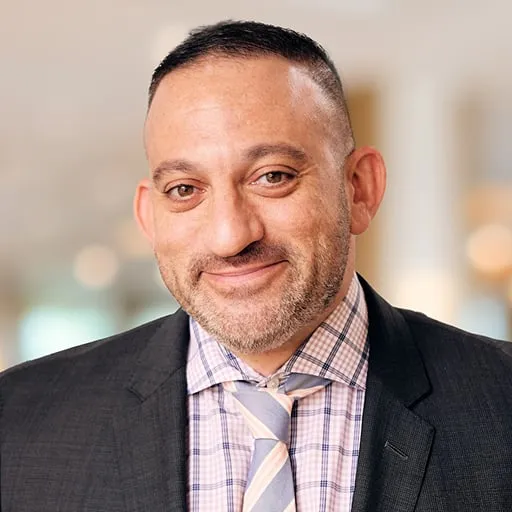
Matt Dolman of Dolman Law Group sat down on the David and Goliath podcast with Stan Gipe and special guest Martin Gould — a nationally recognized sexual abuse attorney who was recently appointed to leadership in the Roblox MDL. On this podcast, the focus is on survivors of sexual abuse, and what they and their families need to know about their rights, their options, and the legal process.
Transcript: David and Goliath Podcast — What Every Survivor of Child Sexual Abuse Needs to Know
Matt Dolman: Welcome to another edition of the David and Goliath podcast. I'm Matt Dolman here with my partner Stan Gipe, and we have with us our esteemed guest, Marty Gould. Marty, I've known you for several years now and your career has been on a meteoric rise. Give us an overview of your practice for our listeners and viewers.
Martin Gould: Our firm handles primarily sexual abuse cases. I've been doing it for over 10 years and we represent survivors of sexual abuse all across the country — seeking to get them compensation, but also closure, and to change policies and procedures to help protect the next generation of children.
Matt Dolman: What makes a sexual abuse case different from a personal injury case — beyond stating the obvious? If I'm a survivor or a family member of a survivor looking to find the right attorney, what do I need to understand about why these cases are different?
Martin Gould: I think the first thing that comes to mind is the nature of the harm. Sexual abuse scars the soul. It scars the psyche. It's something a jury is not going to see as soon as you walk into a courtroom — not the way they would with a catastrophically injured person from a work accident who might be in a wheelchair or have a cast on their arm. But the nature of the injury is very serious. It's catastrophic. It's lifelong. It sticks with people throughout their entire lives and manifests in many different ways.
People are impacted differently, but there are a lot of consistent injury types — post-traumatic stress disorder, anxiety disorder, flashbacks, nightmares, cold sweats, things that trigger the trauma to come back. There's also an increased likelihood of getting involved in destructive cycles, anger issues, being overly aggressive as a way to overcompensate for what happened — because in their minds, they're telling themselves: I will never let somebody do this to me again. They were just innocent children when it happened, and now as adults they're fighting back, and sometimes that can lead to trouble. The nature of the harm and how it impacts people throughout their entire lives — that's the number one thing that makes these cases different.
Matt Dolman: You hear the term trauma-informed advocacy in this space. What does that actually mean? Why would a regular personal injury attorney not be equipped to handle a sexual abuse case? And how does it help survivors avoid being retraumatized through the legal process?
Martin Gould: It's a recognition of how sexual abuse impacts people — and lawyering in that way. It starts with the intake process. Asking open-ended questions. Survivors can range from those who are suicidal and can't even speak about what happened, with a loved one making the call on their behalf, to those who want to be out in public advocating for change, calling out their abusers, and talking to the media. That's a pretty wide spectrum.
It's important for everyone who speaks with a survivor — at any point in the process — to understand how abuse impacts people. To understand why people don't come forward right away. Most survivors never come forward, and the ones who do are statistically in their late 40s and early 50s. That's after they've been through the hell of perhaps drug addictions, many divorces, all sorts of other problems they've endured throughout their lives, and they're finally in a space where they feel like they can come to terms with what happened.
When you hear a survivor say "I haven't reported this to anybody and it happened 10, 15, 20 years ago" — that's normal. There's science behind it. So it's understanding the nuances of how abuse impacts somebody and incorporating that into how you represent them. And then also offering resources — connecting clients with therapists and nonprofits that can provide treatment. Sometimes speaking with family members about how they can support the survivor through the process. Understanding holistically how the abuse has impacted the survivor so you can adequately represent them throughout the case.
Matt Dolman: Are clients looking for closure? Are they looking for justice? What are most survivors actually seeking when they come forward?
Martin Gould: I think it's different for everyone. Everybody who comes forward does want to protect the next generation of children. They want to make a difference — and knowing they're helping others gives them the motivation to keep going through what can sometimes be a difficult process.
Some people want closure. They want to reclaim their lives. Something they buried deep inside — something they felt ashamed of, humiliated by — and being able to stand up for the first time and confront the abusers or the enablers and say: this did happen to me, I count, I'm being counted. That means something. That's a very important part of the process.
And then there's the financial component. Survivors have been through a lot. It's impacted them in many different ways. To give survivors the ability to focus on their mental health, focus on their families, the important relationships in their lives — you need money for that. Instead of worrying about making your next paycheck or paying your next bill. The financial component of the case is important in terms of giving survivors the opportunity to heal.
Stan Gipe: Our primary role as attorneys is to make people as whole as possible for what's happened to them — to do our best within the legal system to compensate people in any way we can. Unfortunately, in our system, the main way we can do that is money. We have no way to undo the wrong.
In cases driven by physical injury, jurors can often see the damage. A paralyzed person sitting in a chair — a juror can almost put themselves in that person's shoes without being asked to. When we're dealing with victims of sexual abuse, these damages aren't as outwardly visible. They're not as self-explanatory to a jury. Most of us have thankfully never been the victim of sexual assault. So how do you go about educating a fact-finder on what it's like for these survivors — when mental health is not as obvious as physical health?
Martin Gould: There's so much good literature out there — studies about how sexual abuse impacts people, and especially how child sexual abuse impacts brain development. The analysis starts with what does the science say.
Sexual abuse can impact brain development in children. When you're developing as a kid and you're in constant fight-or-flight mode, that impacts how your brain forms — because it's not forming in a healthy, natural way. You're constantly in fear because of the abuser. We've had clients undergo brain scans and blood tests that show increased cortisol levels and other measurable physiological impacts.
It starts with a general causation understanding of all the different ways abuse increases the likelihood of involvement in criminal activity, lashing out against authority figures, problems keeping a job, lost earning capacity, lost education. When horrific things are happening to a child, most of those children don't just go to class the next day and focus the way a normal kid would. The science supports it.
So you start with all the different ways in which abuse impacts people, then you look at your client specifically. Do you get nightmares? Check. Flashbacks? Check. Did you have trouble focusing in school? A lot of these kids dropped out. Their grades fell. Do you have trouble keeping a job? Trouble with authority figures? If you were abused by a medical care professional, do you have trouble going to hospitals or trusting another counselor?
You go through all the different ways it impacts survivors and then it's about telling that story. Many survivors haven't undergone the treatment they need — so you recommend that, and typically a therapist will be able to document post-traumatic stress disorder and tie it directly to the sexual abuse they endured. There are usually family members or co-workers or other lay witnesses who can shed light on the impact of the abuse — people who may never have known about the abuse itself but can speak to the before and after. Sometimes you can learn a lot more by listening to others than from the client themselves.
Stan Gipe: These injuries percolate over time. They don't just sit there — they grow and infect a person's life and cause other issues as they mature. Sometimes victims aren't coming forward right away. It's rare that a 12-year-old comes forward at 14 without a very supportive environment around them. They keep it to themselves. And we've had people who were shocked to find out they could still make a claim — sometimes 20 years later.
Some states have very broad statutes of limitations where you can bring these claims 20 or 30 years after they happened. People need to think before they just assume it's too late. Don't just assume because you've waited a long time to make your claim that you can't make your claim.
Martin Gould: One hundred percent. The laws in many states were very unfair for a long time — two years after you turned 18 to file a lawsuit. Many survivors don't come forward because of the humiliation, the shame, the embarrassment. They bury it. Perhaps they were threatened by the abuser. In a lot of cases, the abuser is an authority figure — a priest, a coach, a teacher, a counselor. They tell the child: no one will believe you. Often they're preying on people who already have serious vulnerabilities — perhaps they were at a mental health facility and genuinely needed treatment, and that's part of the reason they were targeted. Or in a juvenile detention center, trapped in a facility, and a guard is telling them: who's going to believe you over me?
There are many reasons that people understand as to why survivors don't come forward. And there's been a movement across the country to change statute of limitations laws to make them more fair. There's also case law in many states recognizing that survivors either repressed the memory or didn't fully appreciate that they were being abused at the time — for instance, if a doctor was abusing someone under the guise of providing necessary medical care.
There's also fraudulent concealment. People may have known their abuser abused them but had no idea the leaders of a church knew about the predator, that there were other reports about him, and they allowed him to stay in ministry with access to children. It never crossed the parents' minds that could possibly happen. Or a guard who was abusing one child — and there were a whole bunch of other kids abused by the same guard, supervisors knew about it, there were other complaints — and the institution covered it up. They minimized it. They didn't want the public to know. That's fraudulent concealment. They hid highly relevant evidence. And many states recognize that — you can't hide evidence of your culpability and then wash your hands of it. Survivors can pursue claims under fraudulent concealment tolling theories. We're seeing that systemically in the Latter-day Saints litigation.
Stan Gipe: There's also a second aspect — people don't even realize that the struggles they're going through in life are related to early trauma. I can still remember one client going: I never really thought about it — maybe this is what's causing me to have problems being intimate with my wife. It may be 20 years after the abuse and people are just starting to connect the dots.
There are states that recognize discovery rules — even if this happened 20 years ago, if you're just figuring out what happened to you, you may still have a claim. You just need to act within a certain amount of time of when you figured it out.
The overarching message I want anyone listening to take away: don't just assume because you've waited a long time that you can't make your claim. Call someone. Have someone look at it. Every claim is different. Every fact pattern may give rise to things a victim isn't thinking about. A lot of people don't call because they think it's been too long — and half the time people are surprised to find out we can still bring claims for them, even years after it happened.
There have also been a lot of changes in the law — look-back windows and revival windows — in both Democrat and Republican states — where even if your statute of limitations had expired, there's a one or two year window to file if the claim rises out of child sexual abuse. It's not a partisan issue. Democrats, Republicans, independents — everybody hates pedophiles. Everybody wants to do right by survivors. Those cases are often just as strong in red jurisdictions as they are in blue.
Matt Dolman: Marty, I want to segue into an area of practice that you've moved into — sexual predation on digital platforms. You're one of the leading voices in cases against Roblox, Discord, and Snapchat. You were recently appointed by Judge Seeborg to leadership in the Roblox MDL. Give us an overview of sexual predation on digital platforms. What is unique about those cases? What do parents need to know?
Martin Gould: There's a group of tremendous lawyers that have come together — Matt is up front in that group — representing thousands of survivors. One after another, law firms started getting calls about horrific things happening on Roblox, which is the number one online gaming platform in the country. It was advertised as an educational platform. They had partnerships with school districts. Their website quoted MIT grads about how it teaches kids coding. A lot of parents threw their kids at the platform saying that's great — not knowing their eight-year-old could be speaking to a 40-year-old predator who had been grooming their child for weeks or months.
There are countless stories of children being manipulated and exploited on the platform. In some cases, it started on Roblox and then moved to Discord or Snapchat. In some horrific cases, children were physically sexually abused or kidnapped.
Reports were being made. Law enforcement was getting involved. This goes back to the early days of the platform. There were alternative safety features that competitors were using that Roblox wasn't using — and it was all driven largely by increasing the value of the company. The metrics for investors are the higher number of users, the greater the potential of the business. That's what drove a lot of the bad decisions that put children at risk. And I haven't heard one time since the beginning of this case where Roblox's executives have asked: how are the victims doing?
Matt Dolman: What do we say to the people in the comment sections of every article about this asking — where were the parents? Why weren't they monitoring their children?
Martin Gould: Parents were lulled into a false sense of security. When the company is out there saying it's educational, it's safe for kids, it has state-of-the-art safety features — it never crossed parents' minds that there were predators on there preying on their kids. There's a tremendous failure to warn. When parents don't know about the threat, they can't prepare for the threat. Roblox knows better. They're in this industry. They know about these problems. They've known about them for a long time. And when did they start warning parents? When did they start warning users? Because once people have more information, they can start thinking about how to protect their children. But a lot of parents don't have an understanding of the default features or the risks — and they're assuming their child is just talking to their buddies.
Matt Dolman: Marty, last month you obtained a $17.5 million settlement. Tell us about that.
Martin Gould: It was a Chicago public school abuse case. In Illinois, when a case involves a municipality, you can't get punitive damages — extra compensation to punish. But we really dug into the liability part of that case and told a compelling story about how it impacted our client. It ultimately settled an hour before trial was scheduled to begin.
It was a long journey for a client who came forward many years after the abuse occurred, reported to law enforcement, and sat through a criminal trial where her credibility and character were attacked. The perpetrator was convicted and sentenced to 22 years in prison. She went through all of that — and then the civil litigation on top of it.
Through the case we learned that she had reported the abuse to another teacher, and through discovery we found that teacher had also had allegations involving misconduct with minors and was being investigated. That tied in the culpability of the institution. After years of litigation, we resolved the case for an amount we thought was fair for the client. You can't undo what happened. But the next best thing is financial compensation so she can focus on her healing.
Matt Dolman: There are some firms in LA getting in trouble for allegedly representing fraudulent claims on juvenile detention cases. How does your firm police its own inventory to make sure the people you're representing are true survivors?
Martin Gould: It's an important question for any law firm that advertises. If you see an advertisement with someone dancing in a video about sexual abuse — that's a huge red flag. True survivors are not calling firms with those types of advertisements. These are very serious matters and they need to be treated seriously.
The process should weed out fraud. There's records verification, interviews with survivors, things like that. In the rare circumstance where someone wasn't in fact abused, the process should catch it. But the overwhelming majority of people who come forward are true survivors — and those are the ones we're pushing forward and filing cases for and advocating for.
Stan Gipe: Marty, thanks for coming on. Your expertise in sexual abuse litigation is nearly unmatched among our legal peers. Matt and I are both very thankful you took the time to be with us today. This has been another edition of the David and Goliath podcast. If you have any questions, you can always find us on our website. Marty, how do people find you?
Martin Gould: They can go to our website at gghlaw.com. And thank you both so much for the work you do and for raising awareness about these important cases.
Matt Dolman: Thanks Marty. We appreciate you coming on.
Sexual Abuse Leaves Invisible Wounds — But They Are Real
One key reality to understand about child sexual abuse cases is that the harm is not visible. It looks nothing like what a jury sees in a traditional personal injury case. There is no wheelchair, no cast — no visible evidence of harm. Yet the damage is catastrophic and life-altering in ways that touch every corner of a survivor's existence.
The science is clear. When a child is subjected to ongoing sexual abuse, their brain does not develop the way it should. Constant fear and trauma keep the brain in a perpetual fight-or-flight state, disrupting normal development in ways that continue into adulthood.
Survivors often experience post-traumatic stress disorder (PTSD) — anxiety, flashbacks, nightmares, and triggers can bring the trauma rushing back without warning.
Beyond the psychological impact, the ripple effects extend into every area of life:
- Trouble focusing in school.
- Falling grades or dropping out.
- Difficulty keeping a job.
- Problems with authority figures.
- Strained relationships.
- Increased likelihood of involvement in destructive cycles
- Lost earning capacity.
- Lost education
A life shaped by something that happened to an innocent child who had no power to stop it.
These are not exaggerations. They are documented, scientifically supported realities — and they are exactly what skilled sexual abuse attorneys work to demonstrate on behalf of their clients.
Most Survivors Don't Come Forward Right Away — And That's Normal
If you have been carrying what happened to you for years — or decades — without telling anyone, you are not unusual. You are not weak. You are not at fault for waiting.
As Martin Gould explains:
"Most survivors never come forward and the ones that do are statistically in their late 40s, early 50s — after they've been through the hell of perhaps drug addictions, many divorces, all sorts of other problems they've endured throughout their lives."
Why Survivors Stay Silent
The reasons survivors stay silent are as varied as the survivors themselves. Shame. Humiliation. Fear. Threats from the abuser. The abuser was an authority figure — a priest, a coach, a teacher, a counselor, a guard — someone who told the child no one would believe them. Someone who held power over them and used it deliberately.
Some survivors buried what happened so deeply that they spent years not fully connecting their struggles — their relationship problems, their difficulty with intimacy, their anger, their anxiety — to what was done to them as a child. That disconnection is not a character flaw. It is a documented, understood psychological response to trauma.
Coming forward is hard. Coming forward after years of silence is harder. But it is possible — and it is worth it.
What Trauma-Informed Advocacy Means — And Why It Matters
Trauma-informed advocacy is a recognition of how sexual abuse impacts people — and a commitment to representing a survivor in a manner that honors that reality. It starts at the very first phone call.
Survivors Feel Safe to Tell Their story
Survivors exist on a wide spectrum. Some are in crisis, barely able to speak about what happened, with a family member making the initial call on their behalf. Others are ready to go public, to speak to the media, to advocate loudly for change. But most are somewhere in between — frightened, uncertain, and need to feel safe before they can tell their story.
A Trauma-Informed Attorney Listens — They Don't Push or Pressure
A trauma-informed attorney understands why survivors don't come forward right away. They ask open-ended questions. They don't push. They connect clients with therapists and nonprofit resources — not just as a legal strategy, but because getting survivors into treatment is the right thing to do and can genuinely change lives. They speak with family members about how to support the survivor through the process. They understand that representing a sexual abuse survivor means caring about that person holistically — not just as a case file.
What Often Motivates Survivors to come Forward
People come forward for many different reasons — and all of them are valid.
To Protect Other Children
Many survivors are motivated by the desire to protect other children. Knowing that coming forward might prevent the same thing from happening to someone else gives them the strength to keep going through what can be a difficult process.
To Get Closure
Many survivors are looking for closure. For the chance to reclaim something that was taken from them. To stand up, finally, and say out loud: this happened to me, and it was wrong. To be believed. To be counted. That act of acknowledgment — of having an institution or a corporation or a perpetrator held accountable — means something profound that cannot be measured in dollars.
To Seek Financial Compensation
The financial component is real and deserves to be spoken about without shame.
Financial compensation is not a betrayal of what happened. It is not reducing a life to a dollar amount. It is giving survivors the resources to heal — to access therapy, to stabilize their lives, to stop worrying about the next bill and start focusing on the people and experiences that matter.
Martin Gould says,
"To give survivors the ability to focus on their mental health, focus on their families, the important relationships in their lives — you need money for that."
It's Not Too Late to File — Even If It Happened Decades Ago
This is perhaps the most important message in this entire conversation — and the one that most survivors need to hear.
Many people assume that because the abuse happened years ago, or even decades ago, there is nothing they can do. That assumption stops countless survivors from ever picking up the phone. And in many cases it is simply wrong.
Stan Gipe says:
"Don't just assume because you've waited a long time to make your claim that you can't make your claim."
Laws for Sexual Abuse Have Been Changing — Including the Statute of Limitations
Laws around the statute of limitations for sexual abuse have been changing dramatically across the country — in both red and blue states. Legislators on both sides of the aisle have recognized that the old rules were profoundly unfair to survivors. Many states have extended the window to file. Others have created lookback windows and revival statutes — temporary windows that allow survivors to file claims even after the traditional statute of limitations has expired.
Discovery Rules Recognize Why Survivors May Not Come Forward for Years
Discovery rules in many states also recognize that survivors sometimes don't connect what happened to them as children with the struggles they are experiencing as adults until years later. If you are just now making that connection, the clock on your claim may not have even started yet.
Fraudulent Concealment Happens Too Often
Fraudulent concealment is another avenue worth understanding. If the institution responsible for your abuse — a church, a school, a detention facility, a sports organization — actively hid evidence of what happened, covered it up, or misled you about what they knew, that concealment can toll the statute of limitations entirely. You could not have known what they were hiding. The law in many states recognizes that.
Every case is different. Every fact pattern is different. The only way to know whether you still have a claim is to talk to someone — and that conversation costs you nothing.
Institutions Cover It Up — That Is Not Your Fault
One of the most consistent patterns in sexual abuse litigation is institutional coverup. Whether it is a church, a school district, a youth facility, or a sports organization — institutions that knew about abuse have a long and documented history of choosing silence over accountability.
How Institutions Cover Up and Intimidate
They minimize. They reassign. They destroy records. They tell victims no one will believe them. They protect their reputations and their finances at the direct expense of the children in their care.
Institutional Coverup Is Not Speculation — It's Been Proven
This is not speculation. It is a pattern that has been proven in courtroom after courtroom across the country. It is exactly why fraudulent concealment laws exist. Survivors had no way of knowing what these institutions knew. They had no access to internal records, internal complaints, internal memos documenting that leadership was aware of a predator and chose to do nothing. That information only comes out in litigation.
If you were abused by someone connected to an institution — a church, a school, a youth program, a detention facility — please don't assume the statute of limitations has passed without speaking to an attorney. What the institution knew, when they knew it, and what they did to hide it may change everything about the viability of your claim.
What a $17.5 Million Settlement Looks Like in Real Life
Numbers like $17.5 million can feel abstract — until you understand the human story behind them.
Martin Gould recently secured a $17.5 million settlement in a Chicago public school sexual abuse case. The case involved a survivor who came forward many years after the abuse occurred. She reported to law enforcement, sat through a criminal trial in which her credibility and character were attacked, and watched her abuser be sentenced to 22 years in prison. Then she went through the civil litigation process on top of all of that.
She did it because she wanted accountability. She did it because she wanted to be believed. She did it knowing it would be hard — and it was. An hour before trial was scheduled to begin, the case settled.
The settlement cannot undo what happened to her. Nothing can. But it gives her the financial foundation to focus on healing — on therapy, on her relationships, on reclaiming the life that was disrupted by what was done to her as a child.
That is what this work is about. Not every case will settle for $17.5 million. But every survivor deserves an attorney who fights as if it might.
What to Do If You or Someone You Love Is a Survivor
If you or someone you love is a survivor of child sexual abuse, we'd like to help.
If you need more information for a loved one who suffered harm on a digital platform — like Roblox or Discord —we provide more information on those dedicated pages:
- Roblox Sexual Abuse Lawsuit
- Discord Sexual Abuse Lawsuit
- Snapchat Sexual Abuse Lawsuit
- Mormon Church Sexual Abuse Lawsuit
- Epstein Survivors
You don't have to figure everything out before you call us. You don't need to know whether you have a case. You don't even have to be ready to file. If you are ready to take one step — contact us — there is no pressure to move forward, but you can find out about your legal options.
Why Call Dolman Law Group
Dolman Law Group represents survivors of sexual abuse across the country. Our team is trauma-informed and we have extensive experience in complex institutional and digital platform litigation. We are deeply committed to treating every survivor with the dignity and respect they deserve.
We offer completely free and confidential consultations — with no obligation or pressure to move forward.