
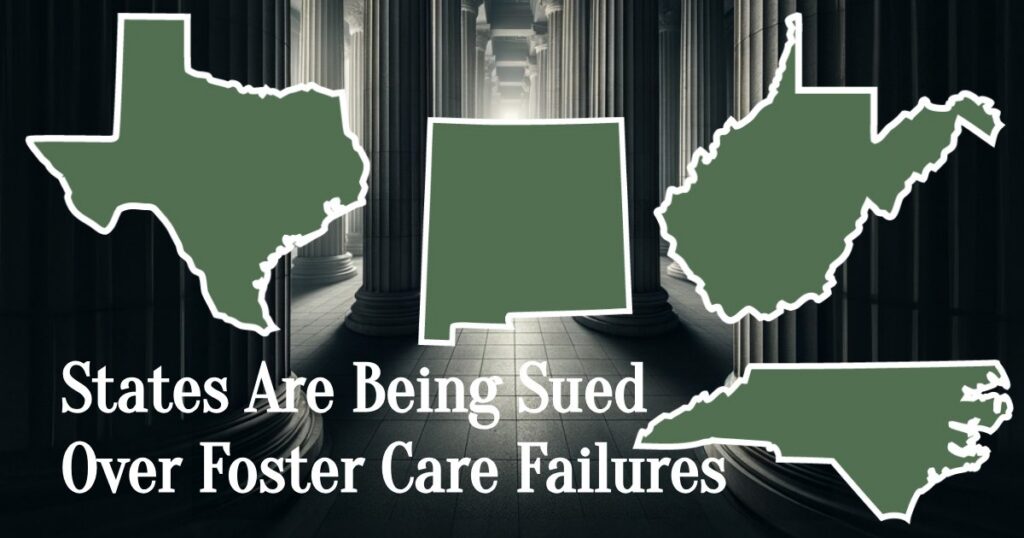
For child survivors of abuse within the foster care system, the idea of pursuing legal action against the very state that was meant to protect them can seem like an insurmountable challenge. Yet, in 2025, states across the nation are increasingly facing lawsuits over devastating foster care failures, signaling a crucial shift in accountability.
These lawsuits, often brought under complex legal theories like gross negligence or civil rights violations, represent a powerful effort by survivors and their advocates to compel systemic change and secure compensation for profound and lasting injuries. Let’s look at how states are being sued over foster care failures in 2025.
How States Are Being Sued Over Foster Care Failures in 2025
Across the U.S., states are facing growing lawsuits over foster care abuse. Survivors are using gross negligence and civil rights claims to hold governments accountable. These cases challenge sovereign immunity and expose systemic failures—leading to multimillion-dollar verdicts and reforms. If the state failed to protect you or someone you love, justice may still be possible.
What makes states liable for foster care abuse in 2025?
- Gross negligence by placing children with unfit foster parents
- Civil rights violations under 42 U.S.C. § 1983
- Failure to investigate reports of abuse or neglect
- Deliberate indifference to known risks
- Lack of oversight, supervision, or suitable placements
- States waiving immunity through specific laws
Schedule a Free Case Evaluation
The State's Responsibility: A Duty to Protect
When a state child welfare agency removes a child from their biological parents, it assumes a significant responsibility for that child's safety and well-being. Once the state takes a child into its custody, federal constitutional protections and state laws may impose duties related to the child's safety and care.
The specific legal duties and standards vary depending on the jurisdiction and circumstances. This duty extends to:
- Thorough Vetting: Properly screening and licensing foster parents, and ensuring all individuals in the foster home are safe and suitable.
- Adequate Supervision: Regularly monitoring foster homes and the child's welfare through visits and case management.
- Prompt Investigation: Responding quickly and effectively to any reports or suspicions of abuse or neglect within a foster care placement.
- Appropriate Placement: Ensuring children are placed in homes that meet their needs and are free from danger.
When a state or its agencies fall short of these responsibilities and a child suffers abuse, they may be held legally accountable for the harm.
Overcoming "Sovereign Immunity": Pathways to State Accountability
One of the biggest hurdles in suing a state government is the legal doctrine of "sovereign immunity," which historically protected governments from lawsuits. However, this immunity is not absolute, and survivors are increasingly finding ways to overcome it, such as:
1. Gross Negligence Claims
Whether a negligence claim can proceed against a state or state agency depends heavily on state law. Some states have waived governmental or sovereign immunity for certain claims through tort claims acts or other statutes, often subject to strict procedural requirements, damages limits, and exceptions. In some jurisdictions, the degree of misconduct, including gross negligence or similar heightened standards, may also affect whether particular defendants are protected from liability.
- Example: A state agency might be found grossly negligent if it places a child with foster parents despite clear red flags in their background check, or if it consistently ignores repeated reports of abuse from a specific foster home without conducting a thorough investigation.
2. Federal Civil Rights Claims (42 U.S.C. § 1983)
A powerful legal tool for survivors of state-sanctioned abuse is a lawsuit brought under 42 U.S.C. § 1983. This federal statute allows individuals to bring claims against government officials and, in some circumstances, local government entities when actions taken “under color of state law” deprive them of rights protected by the U.S. Constitution or federal law. States and state agencies themselves generally are not considered “persons” that can be sued for damages under § 1983.
- Constitutional Rights at Play: In foster care cases, these often include:
- The Right to Due Process (14th Amendment): Arguing that the state failed to provide a safe environment for a child in its custody, thereby violating their fundamental liberty interest in bodily integrity and safety. This is often framed as a "state-created danger" or "special relationship" argument, where the state's affirmative act of taking custody creates a duty to protect.
- The Right to Be Free from Unreasonable Seizure (4th Amendment): In some circumstances, the Fourth Amendment may be implicated by the manner in which a child is removed from a home or taken into state custody without sufficient legal justification.
- “Deliberate Indifference” Standard: Some § 1983 foster care claims require proof that government officials knew of, or were deliberately indifferent to, a substantial risk of serious harm to a child. The precise constitutional standard depends on the claim, jurisdiction, and defendants involved. Generally, negligence alone is not enough to establish a federal constitutional violation.
3. State-Specific Claims and Waiver of Immunity
Some states have specific laws that waive sovereign immunity in certain circumstances, or they may have state-level civil rights statutes that allow claims against government entities. Attorneys experienced in foster care litigation will know these state-specific nuances.
Current Trends in 2025: A Wave of Accountability
As of 2025, there's a clear and growing trend of states facing significant legal consequences for failures within their foster care systems. This is driven by several factors:
- Increased Awareness: Greater public and judicial understanding of the unique vulnerabilities of children in state custody.
- Survivor Advocacy: Tireless work by survivor advocates pushing for legislative changes and holding systems accountable.
- Aggressive Litigation by Child Abuse Law Firms: Law firms that focus on institutional abuse are increasingly taking on these complex cases, building strong arguments against governmental entities.
Recent examples of litigation and court-ordered reform involving state foster care systems include:
North Carolina Foster Care Lawsuit
In April 2025, children in North Carolina's foster care system filed a federal class action lawsuit alleging systemic failures by the North Carolina Department of Health and Human Services. The lawsuit alleges that severe staffing shortages, inadequate monitoring of residential facilities, frequent placement changes, and insufficient behavioral and mental health services have placed children in state custody at risk.
The North Carolina case illustrates how foster care litigation can extend beyond a single incident of abuse. Lawsuits may challenge broader policies and practices when plaintiffs allege that systemic failures repeatedly expose children to unsafe conditions.
West Virginia Foster Care Litigation
West Virginia has also faced major federal litigation over alleged systemic problems in its foster care system. In Jonathan R. v. Morrisey, children in foster care alleged widespread failures involving unsafe placements, inadequate services, excessive moves between placements, and insufficient oversight.
The litigation remained active in 2025. In February, a federal district court dismissed the case on jurisdictional grounds after years of litigation and discovery. The plaintiffs appealed that decision, continuing the legal battle over West Virginia's foster care system.
New Mexico Foster Care Litigation and Reform
New Mexico provides another example of states facing continuing legal pressure over the treatment of children in foster care. The federal lawsuit Kevin S. v. Blalock challenged alleged deficiencies in New Mexico's child welfare system, including inadequate placements and behavioral health services for children in state custody.
Although the case resulted in a settlement several years earlier, implementation and court-ordered reforms continued into 2025. In March 2025, the parties announced a third stipulated remedial order addressing continuing efforts to reform the state's child welfare system. The ongoing proceedings demonstrate that foster care litigation can result in years of judicial oversight and mandated systemic changes rather than ending when a settlement is initially reached.
These cases show that foster care litigation can take different forms, from individual claims for compensation to class actions seeking broader changes in how state child welfare systems operate. The available legal options depend on the facts of the case, the defendants involved, and the laws of the state where the abuse or other failures occurred.
Talk to the File Abuse Lawsuit Team to Learn More About Your Legal Rights
If you are a survivor of sexual abuse that occurred while you were in the foster care system, or if you are a family member supporting such a survivor, you may have legal options for pursuing accountability. While suing a state can be complex due to governmental immunity, experienced legal advocates know how to navigate these challenges, leveraging federal civil rights laws and state-specific exceptions to hold responsible parties accountable.
Your journey to justice can begin today. If you are a survivor of abuse in foster care and are considering your legal options, contact File Abuse Lawsuit for a free and confidential consultation. We are here to listen with compassion, explain the complexities of suing state agencies, and help you pursue the accountability and compensation you deserve. Call us at (833) 552-7274 to speak with a legal advocate who is dedicated to supporting survivors.
CALL 833-552-7274 FOR LEGAL HELP