At Temescal Canyon High School and Lake Elsinore Unified School District, allegations of sexual abuse involving teachers and staff have raised serious concerns about student safety. For many families, the question is not just what happened, but whether the school failed to prevent it and what can be done now.
Can I File a Lawsuit for Sexual Abuse at Temescal Canyon High School in California?
Yes, survivors of sexual abuse at Temescal Canyon High School may have the right to file a lawsuit against both the Lake Elsinore Unified School District and the individual perpetrator. Allegations involving teacher Russell Warren Strange and other employees raise serious concerns about failures to prevent and report abuse. You may still be able to file a claim, even if the abuse happened years ago.
Quick Facts: Temescal Canyon High School Abuse Case
- Temescal Canyon High School teacher, Russell Warren Strange, was arrested in November on multiple charges involving alleged sexual misconduct with a minor
- The investigation began after a report of an improper relationship with a former student
- In 2025, a separate case involved district employee David Robledo Jr., accused of lewd acts on a child and possession of child sexual abuse material
- Robledo had access to multiple campuses within the Lake Elsinore Unified School District
- Prior incidents in the district have raised concerns about safety and communication failures
- Survivors may be able to file civil lawsuits against both the abuser and the school district
- California law may allow claims even if the abuse occurred years ago
Temescal Canyon High School Sexual Abuse Allegations
In November 2018, Russell Warren Strange, a history teacher and the school’s basketball and softball coach at Temescal Canyon High School in Lake Elsinore, California, was arrested on serious charges involving sexual misconduct with a minor.
According to the Riverside County Sheriff’s Department, the investigation began after a report was filed the previous month regarding an improper relationship between Strange (how fitting is his last name?) and a former student.
By November 10, he was booked on multiple charges, including unlawful sex with a minor, lewd and lascivious acts with a minor under 14, and oral copulation with a minor under 16.
That’s not a misunderstanding. Those are serious criminal allegations involving a child. And when something like this happens, the question becomes pretty obvious: How did this go unnoticed, or worse, ignored?
The Details of Strange’s Crimes
The investigation revealed a deeply disturbing timeline.
While the arrest occurred in 2018, court records and trial testimony showed that Strange began assaulting students as far back as 1999. At the time, the victim was a 14-year-old student-athlete, and Strange was a teacher and a coach at the high school in his mid-30s.
Strange used his dual role as her teacher and coach to groom her, which eventually led to a sexual relationship that spanned the rest of the victim's high school career.
Despite the amount of time that had passed since the original assaults, the victim came forward as an adult.
Sometimes it takes a while for sexual assault survivors to be ready to tell the whole world. More on that later.
This led to a long legal battle. In July 2024, Strange was ultimately convicted of:
- Five felony counts of lewd acts on a child aged 14 or 15.
- Five felony counts of sexual penetration with a foreign object on a minor.
The conviction underscored the fact that for nearly two decades, a predator had remained in a position of authority at Temescal Canyon High School, continuing to interact with hundreds of students after the initial abuse began.
Another Lake Elsinore Unified School District Abuse Case (David Robledo Jr.)
The horrid sexual abuse by Russell Warren Strange was not the only case of sexual harm against minors tied to this school district.
In March 2025, David Robledo Jr., a 36-year-old employee connected to the Lake Elsinore Unified School District, was arrested after an online tip submitted to the National Center for Missing and Exploited Children led to an investigation.
That investigation uncovered serious crimes involving Robledo committing lewd acts on a child under 14, possession of CSAM (child sexual abuse material, formerly known as CP), and destruction of evidence. He later pleaded not guilty.
And here’s the real kicker: Robledo had access to dozens of schools in the district.
That kind of access increases risk. If oversight isn’t a priority and communication is lacking, there is more opportunity for sexual abuse incidents, which is exactly what happened here.
A Pattern of Safety Failures in the USD School District
Allegations involving teacher Russell Warren Strange, the arrest of district employee David Robledo Jr., and earlier reports of misconduct within the district all point to a pattern, not isolated incidents.
And nothing shows that clearer than when you look at other sexual harassment and abuse incidents that all occurred in the USD school district.
Child Assaulted At Elementary School by High School Boy
In 2022, a separate incident involved a 15-year-old boy, but this time, he was the perpetrator. On October 17, 2022, the teen boy walked right onto the Lakeland Village Elementary School campus and somehow was able to isolate a young boy and commit a “lewd act on the child.”
According to reports, the assault happened on school grounds during school hours. And you guessed it, this elementary school is in the same USD school district.
As you can imagine, parents raised some serious concerns not only about what happened during school hours, when all children and visitors should be accounted for, but also about what didn’t happen.
Why wasn't it stopped? How was it allowed to happen in the first place? Where was the supervision? And why did any communication from school officials feel delayed or incomplete after something this serious happened right inside the elementary school?
They felt like they weren’t being told the full story. And let’s face it, they probably weren’t. Covering up for pedophiles seems to be as American as apple pie, baseball, and confessionals on Sunday. Too soon?
Potential Superintendent of USD Accused of Sexually Harassing Coworker
And of course, there’s more. This time involving a man in a high position of authority sexually harassing an employee. Once again, concerns were raised about how the district handles serious allegations.
In 2013, a sexual harassment lawsuit was filed against administrator Alain Guevara, who was later considered for a superintendent position. The allegations involved inappropriate sexual behavior toward another adult employee during work events.
That case did not involve students. But it still matters.
This case, the teen assaulting the child, and multiple other cases of adults preying on children, all point to the same underlying issue.
What happens when inappropriate conduct is reported? Is it taken seriously? Is it addressed? Or is it minimized, explained away, or quietly moved past?
When schools try to control the information, especially in a school district where so much has happened, families are left trying to figure out what went wrong on their own.
When you look at these incidents together, different people, different roles, different age groups, it starts to feel less like a coincidence and more like a systemic issue.
You have allegations involving a teacher. A district employee with access to multiple campuses. A prior incident involving student-on-student assault. And even earlier, concerns raised about inappropriate conduct at the administrative level.
What is going on here? Who was responsible for oversight, and where did it break down?
Because at some point, this stops being about isolated incidents. It starts to look like a system that isn’t catching problems early enough, isn’t communicating clearly when something goes wrong, and isn’t taking the kind of action that actually prevents it from happening again.
And when that happens, the consequences don’t just stay within the school. They follow the survivors for the rest of their lives.
How Schools and Districts Can Be Held Liable
Schools have a legal duty to protect students.
This includes properly screening employees, monitoring behavior, responding to complaints, and taking action when there are warning signs.
When they fail to do that, they can be held accountable.
This can include:
- Negligent hiring
- Negligent supervision
- Negligent retention
In cases where employees move between campuses, like in the Robledo situation, liability can expand even further. Oversight failures don’t stay contained to one location.
Signs of Grooming or Abuse by Teachers and Staff
Abuse usually doesn’t start all at once. It builds through a process predators use to gain trust, known as grooming.
Common warning signs include:
- Teachers who spend too much time with the same student
- Situations where a student stays after school to spend time with a teacher
- Private communication outside of approved school channels
- Giving gifts or special treatment
- Crossing physical or emotional boundaries
- Children or teens who start to behave differently or become secretive
- Not wanting to go to school
- Depression symptoms, including too much or too little sleep, constant sadness, a change in demeanor, etc.
Grooming is designed to make inappropriate behavior feel normal over time, but it leaves behind clues if you pay attention. But that also doesn't mean it’s your fault as a parent if you missed something or if you were the victim. Predators are experts at what they do, and oftentimes they are far into the grooming process before anyone even begins to suspect a thing.
What Survivors Can Do After Sexual Abuse at School
There’s no single right way to respond, but there are steps that can help:
- Report the abuse to law enforcement
- Seek medical care or counseling
- Preserve messages or other evidence
- Speak with a lawyer
Some people come forward immediately. Others take years. Both are valid.
Learn more about the massive problem of child abuse in America by reading: www.fileabuselawsuit.com/child-sex-abuse-statistics
Filing a Civil Lawsuit for School Sexual Abuse
Criminal cases focus on punishment. Civil lawsuits focus on accountability, a sense of justice, and compensation for all the damage the person caused, both tangible and intangible.
Survivors may be able to file claims against:
- The abuser
- The school or district
- Other responsible parties
These cases can involve compensation for pain and suffering, emotional trauma, therapy costs, medical bills, and long-term harm.
For a broader look at institutional abuse cases, read: www.fileabuselawsuit.com/juvenile-detention-center-sexual-abuse-lawyer
California Sexual Abuse Laws and Time Limits
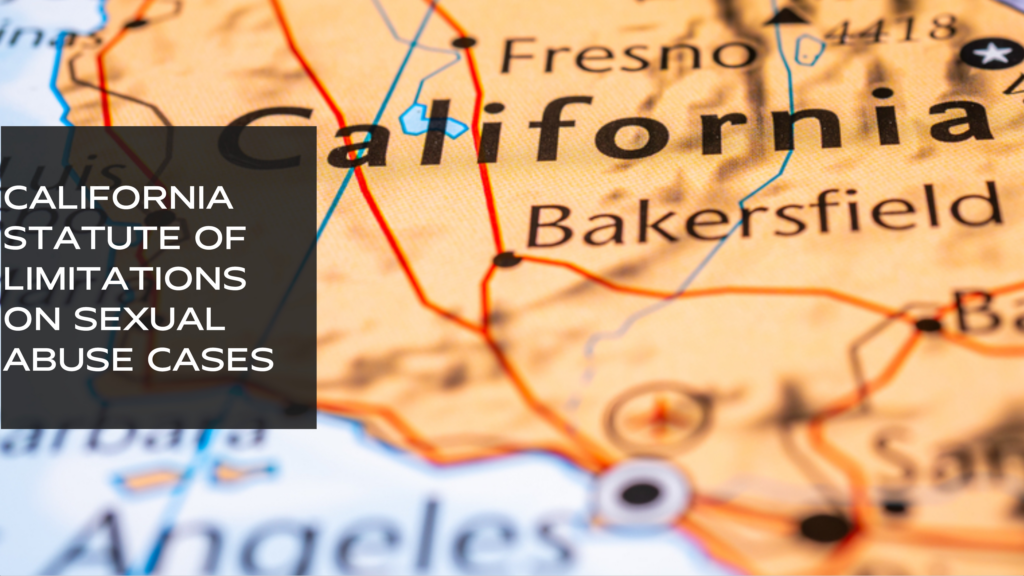
California’s statutes of limitations (SOL) for sexual abuse are some of the most survivor-friendly in the country, especially with the passage of AB 218 and the more recent AB 250.
California law gives survivors extended time to file lawsuits in many childhood sexual abuse cases.
The law recognizes that people don’t always report abuse right away. In many cases, survivors can still bring claims years later, depending on when they discovered the impact of the abuse.
If you’re unsure whether you still have time, it’s worth asking. The answer is not always what people expect.
Here is the breakdown of the current deadlines as of 2026:
- Childhood Sexual Abuse (AB 218): Survivors who were under 18 at the time of the abuse have until their 40th birthday to file a civil lawsuit, or 5 years from the date they discover (or reasonably should have discovered) that psychological injury or illness was caused by the abuse—whichever is later.
- Adult Sexual Assault: For incidents occurring after the age of 18, survivors generally have 10 years from the date of the assault to file, or 3 years from the date they discover the injury was caused by the assault.
- The 2026–2027 "Lookback" Window (AB 250): As of January 1, 2026, a new revival window has opened. This allows adult survivors of sexual assault to bring forward civil claims that were previously time-barred (expired). This window is currently scheduled to close on December 31, 2027.
- Institutional "Cover-Ups": If a survivor can prove that an entity (like a school or organization) actively covered up or hid evidence of the abuse, the standard statutes may be further extended or revived under specific "concealment" clauses in California law.
- Government/Public Entities: Be aware that while AB 218 extended windows for schools, certain public entities may still require a Government Tort Claim to be filed within a much shorter timeframe (often 6 months to 1 year) before a formal lawsuit can be initiated.
Note: Because these laws are frequently updated and involve complex "discovery" rules, it is always best to consult with a lawyer to determine the exact deadline for a specific case.
How a School Sexual Abuse Lawyer Can Help
These cases are complex, involving not just individual criminal acts but a failure of the safety net students rely on. A specialized lawyer does more than just file paperwork; they act as an investigator and an advocate to uncover why the system failed.
A sexual abuse lawyer can:
- Investigate Prior Complaints: Attorneys often find that a perpetrator had a history of "red flag" behaviors—such as being alone with students in locked rooms or sending late-night messages—that were reported but never formally disciplined.
- Obtain Internal Records: Through the legal process of "discovery," a lawyer can force the district to hand over personnel files, emails between administrators, and disciplinary memos that are not available to the public.
- Identify Patterns of Negligence: By looking at cases like the Russell Warren Strange conviction or the 2022 Lakeland Village security breach, a lawyer can argue that the district has a "custom or practice" of failing to protect students.
- Build a Case Against All Responsible Parties: This may include the individual abuser, the school principal who ignored reports, and the school district for negligent hiring or inadequate campus security.
- Navigate "Lookback Windows": Laws like California’s AB 218 and subsequent extensions allow survivors of older abuse—like those affected by Strange’s decades-long career—to file civil suits even if the standard statute of limitations has passed.
This is about more than proving what happened. It’s about showing how it was allowed to happen. By holding the district financially and legally accountable, these lawsuits often force schools to implement stricter background checks, better security protocols, and mandatory reporting training that can prevent future tragedies.
Why Choose File Abuse Lawsuit
Choosing a lawyer for a case like this is not just about legal experience. It is about trust, understanding, and knowing that the people representing you take this seriously.
At File Abuse Lawsuit, we focus on cases involving institutional sexual abuse, including abuse in schools. We understand how these cases work and what is at stake, both legally and personally.
Here is what sets us apart:
- Over 120 years of combined experience in personal injury and abuse litigation
- More than $400 million recovered for survivors and injured clients
- Trial-ready attorneys who are prepared to take cases as far as needed when settlement offers fall short
- Nationwide reach, allowing us to connect you with attorneys who understand your state’s laws
- Free and confidential case evaluations with no pressure or obligation
- Direct access to attorneys, including firm leadership
- A more complete approach that includes referrals to therapy, counseling, and support resources when needed
We are not a firm built on slogans or surface-level attention.
We are a team that focuses on accountability. On listening. On doing the work required to uncover what happened and why.
Because these cases deserve more than quick answers. They deserve real attention and real action.
Speak With a Temescal Canyon Sexual Abuse Lawyer Today
If you or someone you care about was affected by sexual abuse at Temescal Canyon High School or within the Lake Elsinore Unified School District, you may have legal options.
Even if the abuse happened years ago.
Contact File Abuse Lawsuit today for a free and confidential consultation. You can call us at (833) 552-7274 or use our online contact form.
Frequently Asked Questions
Yes, if the district failed to prevent or respond to abuse, it can be held legally responsible.
You may still have a claim under California law, depending on your situation.
Compensation may include emotional damages, therapy costs, and long-term harm.
Yes, if they should have known or ignored warning signs.
That can increase liability and raise questions about district-wide oversight.
Isolation, secrecy, private communication, and boundary violations are common warning signs.
No, a civil lawsuit can proceed independently of a criminal case.
Yes, parents or guardians can bring claims for children.
Text messages, emails, witness testimony, school records, and prior complaints are often key.
It varies, but many cases take months to years, depending on complexity.
In many cases, courts allow survivors to proceed anonymously.
Yes, failure to report suspected abuse can create additional liability.